The Arc of Evolutionary Psychology
June 23, 2026 - 23:29

Evolutionary psychology has long been associated with explaining humanity's darker impulses, such as aggression, jealousy, and even homicide. The field often gained attention for its stark portrayals of mate competition and tribal warfare, painting a picture of a mind shaped by a brutal ancestral past. But a quieter, more hopeful side of the discipline is gaining traction: the study of prosocial behaviors.
Researchers are now using the same evolutionary framework to explore why we form deep bonds, show empathy, and fall in love. The argument is that cooperation, altruism, and romantic attachment were just as crucial to survival as aggression. A mother's nurturing instinct, a community's willingness to share food, or a couple's long-term pair bonding all offered clear reproductive advantages. These behaviors are not just cultural inventions; they are deeply wired into our neural circuitry.
This shift in focus provides a more balanced view of human nature. Instead of seeing us as purely selfish creatures driven by base urges, the arc of evolutionary psychology now suggests that our capacity for kindness and connection is equally fundamental. Love, in this light, is not a sentimental mystery but a powerful biological strategy for raising offspring and building stable social groups. The discipline is thus moving beyond its reputation for highlighting only the shadows, revealing that the same evolutionary forces that gave us conflict also gave us the profound ability to care for one another.
MORE NEWS
August 7, 2026 - 17:44
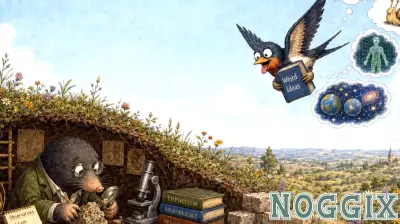
The Two Kinds of Philosophers—And Why We Only Need OneThere is an old way of dividing thinkers, and it still holds up. Some are swallows, soaring high, mapping the whole sky from above. Others are moles, burrowing deep into a single patch of ground,...

August 7, 2026 - 01:24
New Ways to Deal With the Inner CriticThat nagging voice in your head, the one that whispers you are not smart enough, fast enough, or good enough, is a common companion for many people. For years, the standard advice was to simply...

August 6, 2026 - 11:23
What My Therapist Knew Never Reached My Med CheckFor years, I saw two different doctors. One managed my prescriptions. The other managed my mind. The first asked about sleep, appetite, and side effects. The second asked about my childhood, my...

August 5, 2026 - 21:11
How Drug Abuse by Bicyclists Led to a Medicine for PsychosisThe history of medicine is full of strange twists, but few are as unexpected as the link between a group of drug-abusing cyclists and a breakthrough treatment for psychosis. It started not in a...