The Influence of Nature vs. Nurture on Personality Development
20 February 2026
Have you ever wondered why you are the way you are? What shaped your personality? Is it all about your genes, or is it the environment that has the most impact on who you become? These are questions that researchers and psychologists have been debating for ages under the banner of "nature vs. nurture."
In this article, we're going to dive deep into the nature vs. nurture debate, specifically focusing on how both factors influence personality development. So, grab a cup of coffee, settle in, and let's explore what makes you, well... YOU!

What Is Nature vs. Nurture?
Before we jump into the nitty-gritty, let's define what we mean by "nature" and "nurture."- Nature refers to the genetic makeup you inherit from your parents. These are the biological forces that shape your physical traits, like eye color, hair texture, and yes, even some aspects of your personality. Think of it as your default setting.
- Nurture, on the other hand, encompasses all the environmental influences that affect you after you're born. This includes the way you're raised, your social interactions, your education, and even the culture you're immersed in. It's like the software updates that modify your default settings.
Now, here's the million-dollar question: Which one has the bigger say in shaping who you are? Let's break it down.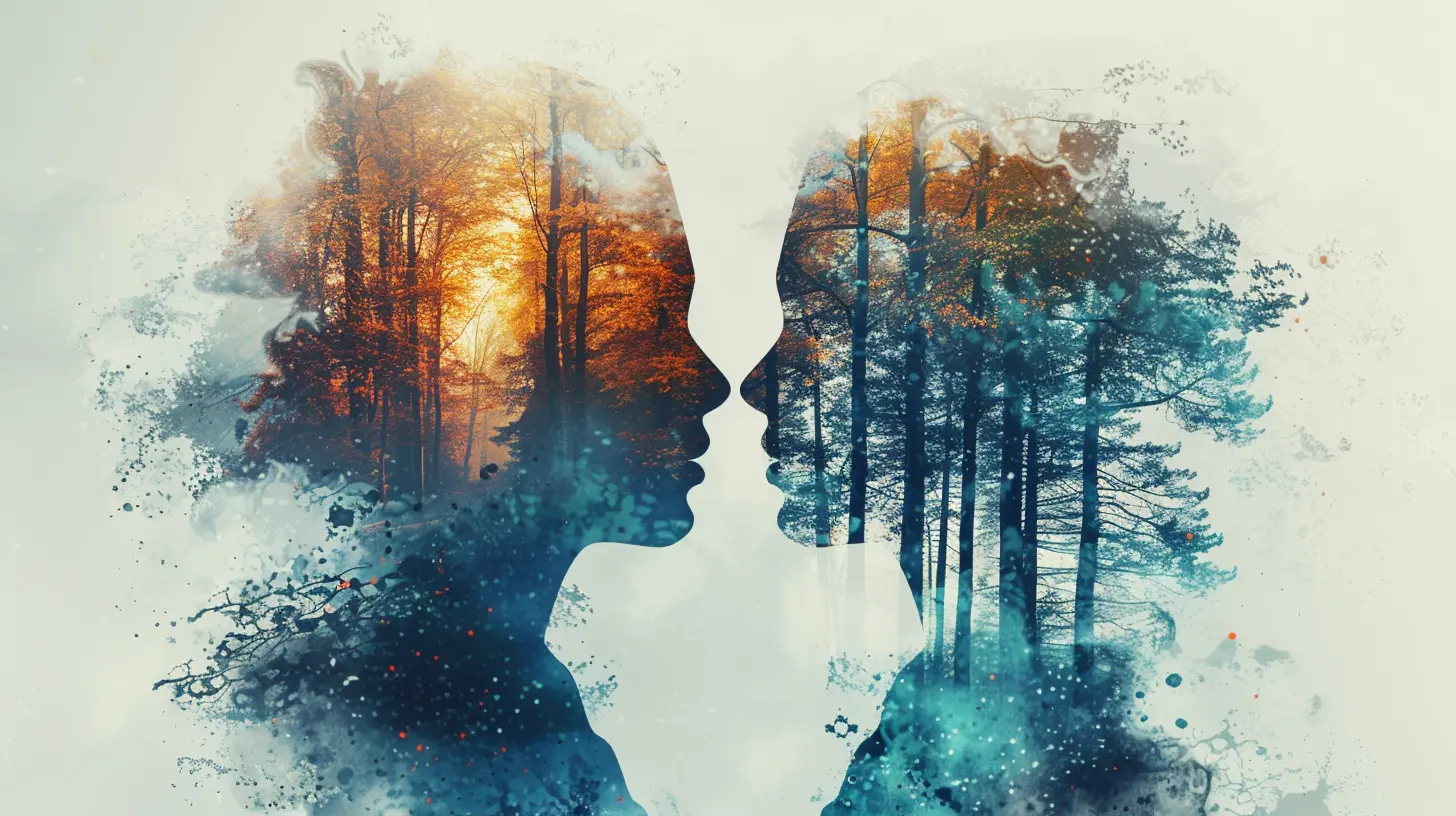
The Role of Nature in Personality Development
Imagine your genes as the blueprint that lays the foundation of your personality. Your DNA contains specific instructions that guide many aspects of who you are, from your temperament to your cognitive abilities.Biological Predispositions
Some psychologists argue that certain personality traits are hardwired into your genes. For example, if you’re more introverted, it might be because of a genetic predisposition toward being less social or more reflective. Similarly, if you're a risk-taker, that thrill-seeking behavior could be linked to genes influencing dopamine levels in your brain.Twin Studies and Genetic Influence
If you're a fan of psychology, you've probably heard of twin studies. These are studies where researchers compare identical twins (who share 100% of their genes) and fraternal twins (who share about 50%) to tease apart the influence of nature vs. nurture.One fascinating finding from these studies is that identical twins, even when raised apart, often show striking similarities in personality. This suggests that genetics play a strong role in shaping who we are.
For instance, if both twins have a high level of conscientiousness or agreeableness, despite being raised in different environments, this points to the influence of nature. Pretty cool, right?
The Role of Nurture in Personality Development
While nature lays the groundwork, nurture plays an equally important role in molding your personality. In fact, many psychologists argue that the environment you're exposed to can either enhance or suppress your genetic tendencies.Early Childhood Experiences
Ever heard the phrase, "Children are like sponges"? It’s true. In the early years of life, the environment has a significant impact on personality development. The way your parents raise you, the experiences you have, and the social interactions you engage in all shape your worldview and, ultimately, your personality.For example, if you grow up in a supportive, loving household, you're more likely to develop a secure attachment style and be more trusting and open in relationships. On the other hand, if your childhood was filled with conflict or neglect, you might develop a more anxious or avoidant personality.
Social and Cultural Influences
Culture also plays a major role in shaping your personality. Consider how individualistic societies, like the United States, tend to emphasize independence and self-reliance. In contrast, collectivist societies, like Japan, emphasize community and harmony within groups.The culture you grow up in can influence everything from how you express emotions to how you perceive success. That’s why someone raised in a Western society might prioritize personal achievements, while someone raised in an Eastern society could focus more on group harmony and family.
Nature vs. Nurture: A Blended Approach
So, is it nature or nurture that ultimately shapes your personality? The truth is, it's not an either/or situation. In fact, most psychologists today believe in a "biopsychosocial" model, which acknowledges that both biology and environment interact in complex ways to influence personality.Gene-Environment Interaction
One of the most fascinating aspects of this debate is the concept of gene-environment interaction. This means that your genes and your environment don't operate in isolation. Instead, they influence each other. Your environment can activate or deactivate certain genes, and your genetic predispositions can shape the way you respond to your environment.For example, let’s say you have a genetic predisposition to be more aggressive. If you're raised in a nurturing, peaceful household, that aggression might never fully manifest. On the flip side, if you're raised in a violent or chaotic environment, that genetic predisposition might become more pronounced.
It’s like a dance between your biology and your experiences, with neither leading the way entirely.
Epigenetics: The Bridge Between Nature and Nurture
We can't talk about gene-environment interaction without mentioning epigenetics. This field of study looks at how your environment can actually change the way your genes are expressed.Think of it like this: Your DNA is a book filled with instructions. Epigenetics is like the sticky notes placed on certain pages, telling your body which instructions to read and which to skip. Your environment — including things like stress, diet, and social relationships — can add or remove these sticky notes, influencing which parts of your genetic code are activated.
This means that even if you're born with certain genetic predispositions, your environment has the power to turn those genes on or off. It’s a mind-blowing concept that really blurs the lines between nature and nurture.
Famous Examples of Nature vs. Nurture in Action
To really drive home the point that both nature and nurture shape personality, let's look at a couple of famous examples from history and psychology.The Case of the Jim Twins
One of the most famous cases in twin studies involves the Jim Twins. These identical twins were separated at birth and raised in different families. Despite not knowing each other, when they were reunited as adults, their lives were eerily similar. They had both married women named Linda, divorced, and then married women named Betty. They both worked as sheriffs, had similar hobbies, and even named their dogs Toy.How do we explain this? Their genetic similarities clearly played a role, but it’s also possible that some of their shared experiences — even though they were raised apart — influenced these outcomes. It’s a fascinating mix of nature and nurture working together.
The Tragic Story of Genie
On the flip side, the story of Genie provides a heartbreaking example of how nurture can profoundly affect personality development. Genie was a girl raised in extreme isolation, confined to a small room and deprived of social interaction for most of her childhood. When she was finally rescued, she had almost no language skills and struggled to form attachments with others.Genie's story illustrates how crucial early social experiences are for developing a healthy personality. Despite any genetic predispositions she may have had, her environment completely hindered her development.
Is One More Important Than the Other?
So, after all this, is there a clear winner in the nature vs. nurture debate? Not really. Instead of thinking of nature and nurture as competitors, it’s more helpful to see them as partners working together to shape who you are.Your genes provide the foundation, but your environment helps build the structure. It’s like baking a cake: nature provides the ingredients, and nurture is the oven that bakes it. Without one or the other, you wouldn’t get the final product.
The Takeaway
The next time you find yourself wondering why you're introverted, extroverted, cautious, or adventurous, remember that it’s not just your genes or your upbringing alone. It’s the intricate interplay between the two. And while you can't change your genetic code, you do have some control over your environment, which can help shape the best version of yourself.Conclusion
The influence of nature vs. nurture on personality development is a complex, ongoing debate that’s unlikely to be settled anytime soon. But what we do know is that both elements are essential in making us who we are.From genetic predispositions that lay the groundwork for our personalities to the environments that mold and refine us, it’s clear that nature and nurture are inextricably connected. So, whether you were born with certain traits or developed them through life experiences, embrace the unique combination that makes you, you!
all images in this post were generated using AI tools
Category:
Psychological ResearchAuthor:

Alexandra Butler
Discussion
rate this article
2 comments
Violet Cummings
Fascinating insights on personality shaping factors!
March 5, 2026 at 4:56 AM
Alexandra Butler
Thank you! I'm glad you found the insights intriguing.
Zane Cooper
Great article! It effectively highlights the interplay between genetics and environment in shaping personality. Exploring specific examples would enhance understanding even further. Thank you for shedding light on this complex topic!
February 21, 2026 at 5:27 PM
Alexandra Butler
Thank you for your feedback! I appreciate your suggestion and will consider incorporating specific examples in future articles.